
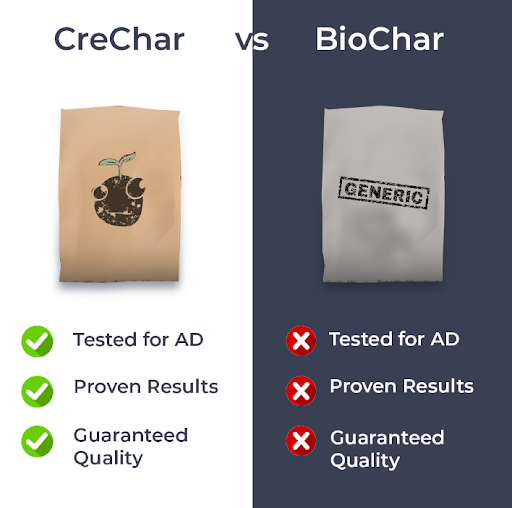
Biochar, a stable carbon material produced from organic sources through pyrolysis, is rapidly becoming an essential component in anaerobic digestion (AD) systems. Its unique properties make it highly effective in enhancing biogas production. But what sets apart generic biochar from specialised products like CreChar? Let’s explore the differences and the specific advantages that CreChar brings to anaerobic digestion.
The Role of Biochar in Anaerobic Digestion
Biochar’s effectiveness in anaerobic digestion is due to several key properties:
- High Surface Area and Porosity: Biochar provides a large and porous surface, which serves as an ideal habitat for microbial communities. This enhanced microbial activity leads to more efficient breakdown of organic matter and higher biogas production.
- Defined Carbon and mineral content.
- Electrical conductivity: Improves microbial performance.
- pH Buffering: Biochar helps maintain optimal pH levels, reducing fluctuations that can disrupt the digestion process and ensuring smoother operation.
However, not all biochars are the same and the effectiveness of biochar can vary significantly depending on its source material and production process. This variability means that biochars can be optimised for specific purposes like AD.
What Makes CreChar Different?
CreChar stands out from generic biochar due to its specifically engineered properties for anaerobic digestion. Through years of meticulous research and testing, CreChar has been optimised to enhance the anaerobic digestion process more effectively than standard biochar. Here are the key benefits of using CreChar:
- Increased Biogas Production: CreChar can boost biogas yields by up to 10%. Its optimised surface area and porosity enhance microbial activity, leading to more efficient digestion.
- Improved Biogas Quality: CreChar enhances the quality of biogas by increasing the methane content by up to 3%. This makes the biogas more energy-rich.
- Greater Process Stability: CreChar helps stabilise the anaerobic digestion process, reducing the volatility that can lead to operational disruptions.
- Reduced H2S and ammonia: This can lead to reduced costs of additives to mitigate the issue or allow the use of more nitrogen rich feedstocks such as poultry manure.
- Carbon Sequestration: Using CreChar not only boosts biogas production but also contributes to carbon sequestration, supporting environmental sustainability.
- Enhanced Profitability: The combined benefits of higher biogas production, improved biogas quality, and reduced operational costs translate into increased profitability for AD systems.
The Science Behind CreChar
The superiority of CreChar is rooted in its production process and rigorous testing and has a defined set of characteristics which work in harmony with the microbiology:
- Optimised Surface Area and Porosity: By choosing the right feedstock and process parameters, CreChar is engineered to maximise microbial colonisation and activity, ensuring more effective digestion.
- Electrical conductivity: High conductivity helps improve microbial communication and efficiency, especially within methanogenesis.
- The carbon and mineral content are designed to enhance microbial interaction.
- Downstream processing ensures CreChar is evenly distributed throughout the digester. This prevents sinking or floating layers in the tank
- Effective pH Buffering: CreChar’s buffering capacity helps to maintain optimal pH levels, which is crucial for the stability of the anaerobic digestion process.
Practical Implications for Biogas Producers
For biogas producers, the use of CreChar offers several practical advantages:
- Higher Biogas Yields: The increased biogas production translates to more energy and higher revenues or savings from reduced feedstock costs.
- Better Biogas Quality: Higher methane content improves the value of the biogas and can reduce pressure on upgraders.
- Operational Stability: Reduced process instability ensures smoother and more reliable operations.
- Cost Savings: Reduced need for other additives and enhanced process efficiency leads to lower operational costs.
- Environmental Benefits: CreChar’s role in carbon sequestration supports sustainable biogas production practices.
- Regulations: CreChar is not derived from wastes so can be added without any issues and it has no impact on the PAS110 status of the digestate.
Conclusion
CreChar sets a new standard with its optimised properties and proven performance. By significantly enhancing biogas production and quality, stabilising the digestion process, and supporting environmental sustainability, CreChar provides a compelling choice for biogas producers looking to maximise efficiency and profitability. If you’re aiming to improve your anaerobic digestion operations, CreChar represents an invaluable and innovative solution.
For more information on CreChar or to sign up to one of our trials please contact alana.mcskimming@carbogenics.com

