
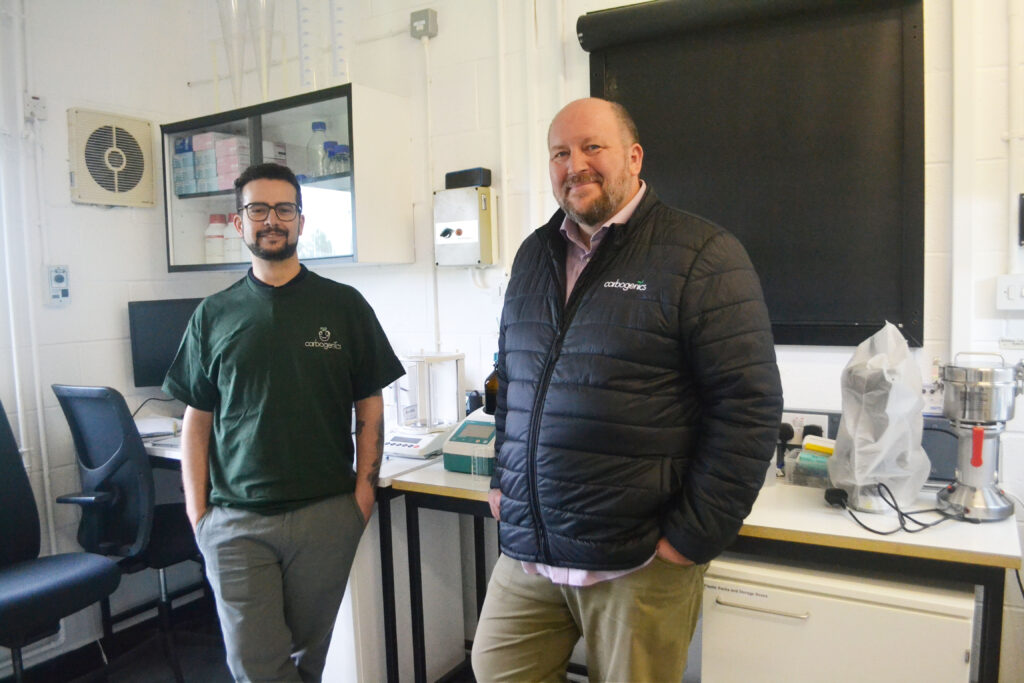
Starting in July 2026, the project will investigate an innovative approach to addressing one of the water sector’s emerging challenges: the removal of Emerging Contaminants (pharmaceutical, PFAS, Personal Care Products, Hormones/endocrine-disrupting compounds, Pesticides, Microplastics) from wastewater.
The project will explore how wastewater screening waste – an unavoidable by-product generated during wastewater treatment – can be converted into FilaChar®, Carbogenics’ patent-pending carbon material, and subsequently applied to remove pharmaceutical contaminants from wastewater streams.
This work builds on Carbogenics’ vision of transforming wastewater-derived waste into valuable treatment resources. Rather than sending screening waste to landfill, the project will assess how it can be converted into a functional carbon material capable of delivering environmental and operational benefits within the water sector.
Emerging Contaminants are receiving increasing attention due to their persistence in aquatic environments and the challenges associated with removing them through conventional treatment processes. Through this project, the partners will focus on pharmaceutical removal and investigate whether wastewater-derived carbon materials can provide an effective and more circular solution to targeting these.
The collaboration brings together complementary expertise from across industry and academia:
- Carbogenics’ expertise in engineered biochar production
- Scottish Water’s operational knowledge and understanding of real-world wastewater treatment challenges
- ERI/UHI’s scientific and analytical capabilities in environmental technologies and water treatment research
Dr Loïc De Carvalho, Head of R&D & Consulting at Carbogenics, said:
“This project represents an exciting opportunity to investigate how waste materials generated within wastewater treatment systems can be transformed into part of the solution. By exploring the use of wastewater-derived carbon materials for pollutants removal, we are continuing to develop innovative approaches that support circular and decarbonisation solutions through both resource recovery and environmental protection.”
Tamsyn Kennedy of Scottish Water commented:
“The water sector continues to explore new approaches to addressing emerging contaminants while improving resource efficiency. This project offers an opportunity to better understand how recovered materials could contribute to future treatment solutions, and we’re pleased to be collaborating with Carbogenics and ERI/UHI on this important work.”
Dr Szabolcs Pap of Environmental Research Institute, University of the Highlands and Islands added:
“Collaborative projects such as this demonstrate the value of bringing together industrial and academic expertise to tackle complex environmental challenges. Through rigorous scientific evaluation, we aim to generate evidence on the effectiveness of wastewater-derived carbon materials and their potential role in supporting more sustainable wastewater treatment processes.”
Together, the partners aim to generate evidence on the effectiveness of wastewater-derived carbon materials for pharmaceutical removal while exploring a more circular approach to waste management within the water sector.
The project represents another step towards lower-carbon, resource-efficient wastewater treatment systems that recover value from waste, protect aquatic environments, and support the transition to a circular economy.
Carbogenics, Scottish Water and ERI/UHI look forward to sharing progress and results as the project develops over the coming months.


