
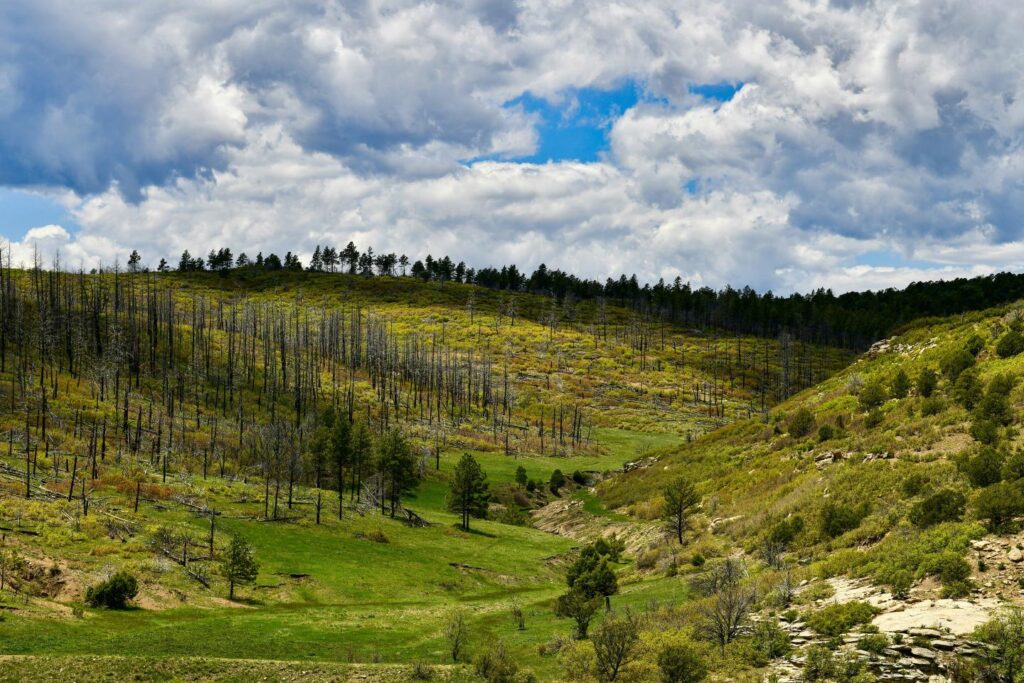
Raton is surrounded by expansive municipal and forested lands that require careful management to mitigate severe wildfire risks. The region has witnessed the devastating impact of wildfires firsthand, including the Track Fire of 2011, which burned over 27,000 acres right on Raton’s doorstep, forced mass evacuations, and threatened critical infrastructure.
Regional megafires like the Calf Canyon/Hermits Peak Fire of 2022 – which became the largest wildfire in New Mexico’s history, burning over 341,000 acres across the Sangre de Cristo range – and the historic Ponil Complex Fire of 2002 (over 92,000 acres) further underscore the constant, pervasive threat posed by wildfires and the urgent need for proactive forest thinness and mitigation efforts.
The Raton community relies heavily on surface water sources – most notably Lake Maloya and the surrounding Chicorica Creek watershed – making the city particularly vulnerable to the post-fire erosion, ash runoff, and watershed destruction that follow catastrophic wildfires. Protecting these critical municipal water sources is essential for maintaining both ecological health and the long-term water security of the region.
Historically, Raton thrived as a major coal mining, railway, and manufacturing hub along the historic Santa Fe Trail. Today, solid foundational infrastructure – including accessible industrial sites, upgraded municipal utilities, direct access to Interstate 25, and an active BNSF railway main line – provides an unmatched foundation for new industrial and economic development. While expanding housing stock remains an ongoing goal, state-level economic development incentives, local industrial development support, and federal opportunity zone advantages create a fertile environment for sustainable investment, driving community growth and economic resilience.
This innovation district seeks to reverse economic and environmental challenges by leveraging abundant local biomass from forest restoration, municipal waste streams, and wildfire mitigation efforts across Colfax County and neighboring timberlands. By converting this biomass into renewable energy and sustainable materials, the project directly reduces wildfire risks, restores ecological balance, and delivers high-value local economic opportunities. Supported by strong community leadership, local stakeholder engagement, and versatile industrial land ready for development, the initiative aligns perfectly with Raton’s goals of economic diversification, environmental stewardship, and downtown/regional revitalization.
By leveraging its strategic position along a major national transit corridor, proximity to raw forest materials, and a clear vision for sustainability, Raton can pioneer a scalable circular economy model – fostering long-term prosperity while positioning itself as a regional leader in renewable energy, biochar, and sustainable development.


