
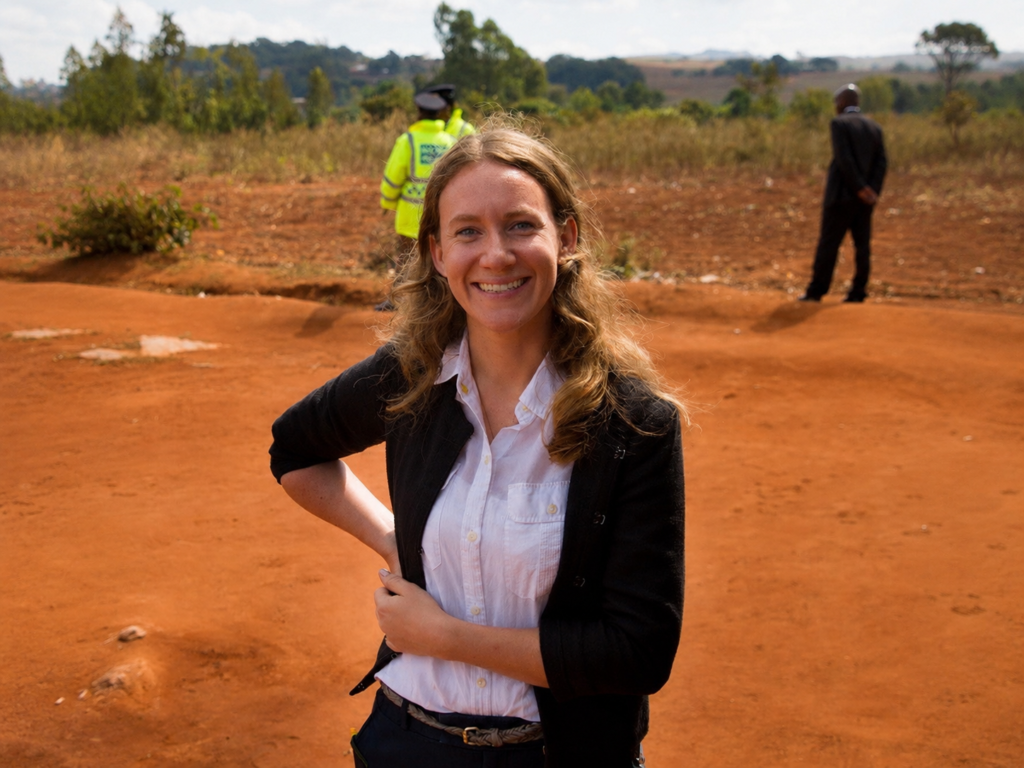
Sydney brings over a decade of experience at the intersection of renewable energy, climate policy, and environmental innovation. She holds a Ph.D. in Chemical Physics from the University of Colorado Boulder and has held senior roles at the New Mexico Environment Department, the U.S. Department of State, clean energy startup Camus Energy, and most recently as Deputy Assistant Secretary for Renewable Energy at the U.S. Department of Energy’s Office of Energy Efficiency and Renewable Energy.
Today, she is helping lead Carbogenics USA’s mission as Chief of Staff to transform fire-damaged and overgrown landscapes into valuable resources through biochar production.
1. You’ve worked across government, startups, and renewable energy. What first sparked your interest in clean energy and environmental innovation?
“For me, joining Carbogenics was about solving real problems for real places. I’ve worked across government, startups, and renewable energy, and the common thread has always been finding projects where you can build something that actually moves the needle: good jobs, a value-added product, and a smarter way of handling resources we’re currently wasting. That’s what pulled me toward clean energy and innovation more broadly. Not the technology for its own sake, but what it can do for a community.”
2. What attracted you to Carbogenics and convinced you to join the team?
“Carbogenics gave me the opportunity to build something with a clear, tangible payoff for New Mexico. Biochar from biomass means good jobs, a real product, and a way to deal with the wildfire fuel sitting across the state instead of just managing around it. When I saw how directly the model addressed all of that at once, joining wasn’t a hard decision.”
3. What excites you most about Carbogenics USA’s mission?
“What excites me most is turning a liability into an economic ecosystem. Fire-damaged and overgrown landscapes have been treated as a cost, something to manage and clean up. We’re flipping that. The same biomass that drives wildfire risk becomes the feedstock for a real product, and that creates rural economic opportunity where it’s needed most: jobs, revenue, and a use for material that used to just sit there as a liability.”
4. As someone deeply connected to New Mexico, what opportunities do you see for the state?
“I love New Mexico, and the opportunity here is significant. The state’s Forestry Division has identified 65 Community Wildfire Protection Plans covering 922 communities at risk from wildland fire, with 453 of those rated high risk. That’s an enormous, steady supply of biomass that today is simply a liability. In just 2022, New Mexico saw 904,422 acres burned, well above the 1995-2015 average of roughly 270,000 acres burned annually. That gap between “normal” and recent fire years is exactly the trend that makes biomass utilization urgent, not optional.” And that’s just ‘primary’ biomass, food and agriculture biomass bi-products is also a huge challenge for the state and a source of feedstock for Carbogenics….”
5. Looking ahead, what are you most excited to achieve in your new role?
“Right now, my focus is getting our first facility online here in New Mexico. That’s the milestone that turns everything we’ve been talking about, the jobs, the wildfire mitigation, the circular economy, from a plan into something real and operating. Once the staff are employed, that facility is running with our feedstock secured, it proves the model and sets the stage for everything that comes next- a large business development drive for our Crechar biochar product into Anaerobic Digestion across the USA.”
To learn more about Carbogenics USA and our work transforming biomass into high-value biochar products, get in touch with Sydney at sydney.lienemann@carbogenics.com


