
The Role of Biochar in Anaerobic Digestion
In the pursuit of sustainable solutions to waste management and renewable energy production, the anaerobic digestion industry stands at the forefront of innovation. One such innovation that holds immense promise is the integration of biochar into anaerobic digestion systems. Biochar, a carbon-rich material produced through the pyrolysis of biomass, has emerged as a versatile tool with transformative potential in enhancing the efficiency, stability, and environmental sustainability of anaerobic digestion processes.
“Quality and Customization of Biochar: Key to Success”
The physiochemical properties of biochars can vary dependent upon different parameters e.g. feedstock, production temperatures, residence time. This means not all biochars carry the same characteristics and can, therefore, be produced to be optimal for a given application. Quality and customization are paramount in harnessing the full potential of biochar across diverse applications or tailoring biochar production to specific feedstocks and processing methods is essential to meet the distinct requirements of various applications and ensure consistent quality.
Enhancing Biogas Production
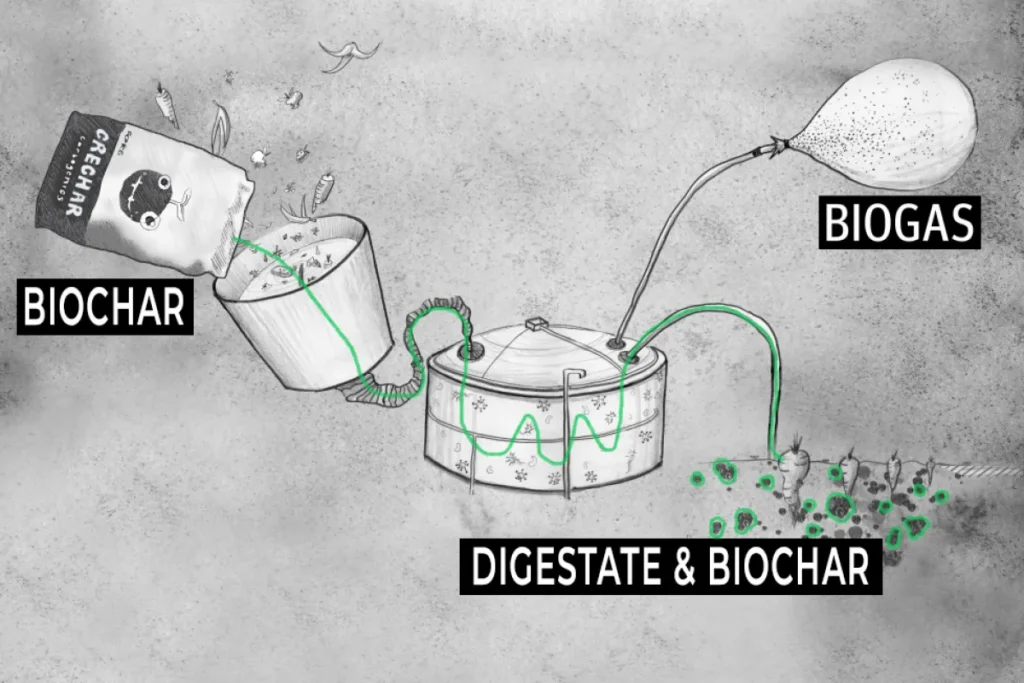
At the heart of anaerobic digestion lies the production of biogas—a renewable energy source comprising primarily methane and carbon dioxide. Biochar serves as a valuable additive in anaerobic digesters, where it aids microbial colonisation and enhances the digestion process. The porous structure of biochar provides an ideal habitat for microbial consortia, promoting the growth of methanogens and facilitating faster breakdown of organic matter into biogas.
Mitigating Process Instability
Anaerobic digestion systems are susceptible to process instability caused by fluctuations in feedstock composition, pH, and microbial activity. Biochar serves as a stabilising agent in anaerobic digesters, buffering pH fluctuations.
Furthermore, the presence of biochar helps to adsorb inhibitors like ammonia and H2S and stabilise microbial populations, thereby reducing the risk of process inhibition and digester failure. Additionally, biochar has been shown to mitigate the accumulation of volatile fatty acids—a common indicator of digester instability—by enhancing microbial digestion efficiency and organic matter degradation.
It enables operators working with more challenging feedstocks i.e chicken manure, fish, food waste to utilise those within their feedstock mix without compromising their digester health.
Improving Digestate Quality
Beyond its role in biogas production, biochar also contributes to the quality and usability of digestate—the nutrient-rich residue remaining after anaerobic digestion. By adsorbing and immobilising nutrients such as nitrogen and phosphorus, biochar could help to mitigate nutrient leaching and runoff from digestate, thereby reducing the risk of water pollution and nutrient imbalances in soil ecosystems. Moreover, the incorporation of biochar into digestate could enhance the soils structural stability, water retention capacity, and nutrient retention properties, making it a valuable soil amendment for agricultural applications.
Promoting Sustainability and Circular Economy
By harnessing the synergistic benefits of biochar in anaerobic digestion, the industry can advance towards greater sustainability and resource efficiency. This closed-loop approach aligns with the principles of the circular economy, where waste materials are repurposed and recycled to create value, minimise environmental impact, and foster resilience in resource management.
What Biochar products are available for Anaerobic Digesters?
While biochar is commonly associated with soil health improvement, its applications extend far beyond agricultural contexts. When seeking biochar products tailored for anaerobic digestion systems, the options may seem limited. Traditional biochars, primarily designed for soil enhancement, often lack the specialised properties required to optimise anaerobic digestion processes.
In this landscape, Carbogenics’, patented CreChar solution emerges as a game-changer. Specifically engineered by Edinburgh University Biochar Research centre spin out, engineered, developed and trialled in full scale operations in UK. CreChar offers a host of benefits that set it apart from conventional biochar offerings and delivers following results;
- Increased Biogas production by up to 10%
- Enhancing Biogas quality with up to 3% more methane
- Reducing process instability for smoother operations
- Reducing ammonia and H2S inhibition
- Helping to sequester carbon in the soils
- Reduced requirements for Trace Elements
- Easy application with no need for system modification
- Increased profits
Conclusion
In conclusion, biochar holds immense potential as a game-changer in the anaerobic digestion industry, offering multifaceted benefits ranging from enhanced biogas production to improved digestate quality and process stability. By integrating biochar into anaerobic digestion systems, stakeholders can unlock new pathways towards sustainability, resilience, and resource efficiency in waste management and renewable energy production.
At Carbogenics, we specialise in optimising anaerobic digestion plants for maximum efficiency. Our team of experts is dedicated to providing personalised guidance and support throughout the process. Please reach out to alana.mcskimming@carbogenics.com to find out how we can support your AD plant.

