
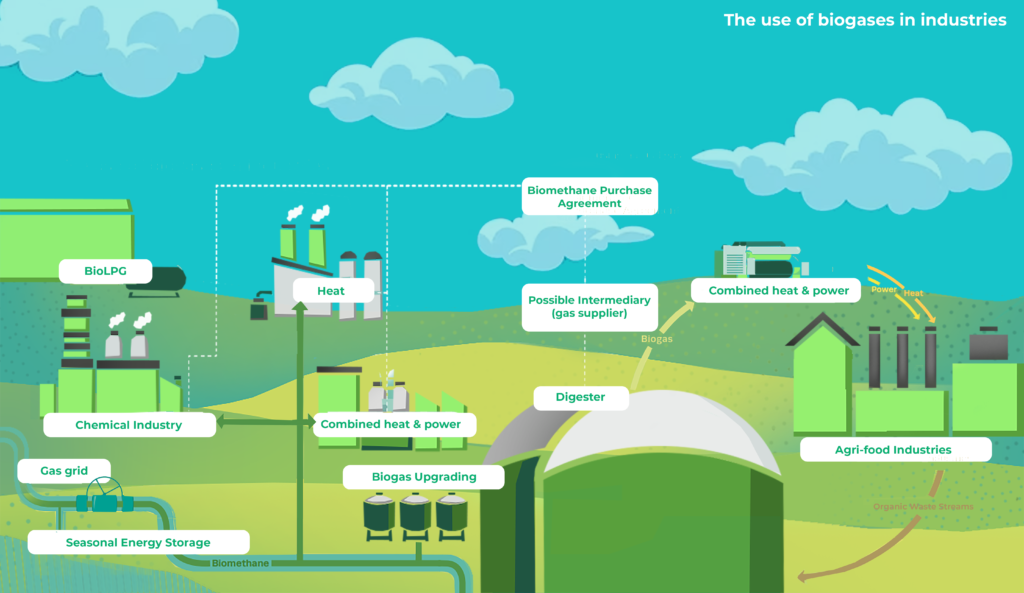
How can biogases help to decarbonise industrial processes?

How can biogases help to decarbonise industrial processes? - Diagram
Industry was responsible for more than a quarter of energy consumption in 2021 within the EU. However, less than 10% of the industrial energy demand that year was met using renewable sources.

Table of Contents

Meeting the Energy Needs of European Industry

In 2021, industry accounted for over a quarter of the EU’s final energy consumption. However, a mere fraction of this industrial energy demand, less than 10%, was met by renewable sources. The dominant player in the industrial energy mix was natural gas, making up 33% of the sector’s energy use.

The journey toward achieving low-carbon industry in Europe is a multifaceted endeavor due to the wide array of processes involved. Energy requirements across industries vary significantly, requiring a diverse set of tools to facilitate the transition. Among these, natural gas remains essential for generating process heat and providing methane as a feedstock. In contrast, biogases offer a promising solution, particularly for processes demanding high temperatures and steam pressure. As of 2022, 18% of upgraded biogas was harnessed in industry, with a trajectory for further growth.

How Biogases Foster Decarbonization in Industrial Processes:
  • Biomethane’s Parity with Natural Gas: Biomethane can seamlessly replace natural gas for both energy and feedstock applications. Chemically equivalent and possessing identical energy content, biomethane is a sustainable substitute.

  • BioLPG as an Alternative: BioLPG can readily replace fossil LPG utilising the same delivery methods, such as truck refilling on-site tanks.

  • On-Site Renewable Energy Generation: Raw biogas or biomethane can efficiently produce renewable electricity, heat, and steam on-site through combined heat and power generators (CHP).

  • Utilising Existing Infrastructure: Biomethane’s compatibility with the existing gas networks and end-use appliances, such as boilers and furnaces, entails no adaptation cost for industries already using natural gas.

Recommendations for a Sustainable Transition:
  • Recognizing Biogas and Biomethane: It is crucial to acknowledge biogas and biomethane as a cost-effective decarbonization pathway within European strategies, alliances, and roadmaps for EU industries.

  • Supporting Industrial Demand: Encourage companies to report biomethane consumption using EU Guarantees of Origin and sustainability certificates under the EU Corporate Sustainability Reporting rules.

  • Integration in Emission Reporting: Promote the recognition of Guarantees of Origin and sustainability certificates in European and international GHG emissions reporting frameworks, including the GHG Protocol and other voluntary reporting systems.

  • Eligibility for Public Funding: Recognize biogas-based solutions as eligible under EU public funding and EU state aid rules for the decarbonization of industries.

These recommendations aim to reinforce the pivotal role of biogases in the sustainable transformation of European industries, aligning with the broader commitment to a low-carbon future.

To find out more about our services and products please reach out to alana.mcskimming@carbogenics.com

Get a tailored CreChar® solution

For further information on Crechar® and other services from Carbogenics please contact: 

Lidia headshot

Lidia Krzynowek

(COO and Co-Founder) lidia.krzynowek@carbogenics.com

Related Articles

Oil Shock in the Gulf: Why the Iran War Is a Wake-Up Call for Biogas

April 1, 2026

Whisky Business? Let’s Talk Distillery Waste

March 12, 2026

Nearing the Finish Line: Our FilaChar Innovate UK Project

February 19, 2026

Food Waste: The Good, the Bad, and the Biogas

February 5, 2026

Biochar and the Future of Carbon Credits: Unlocking the Hidden Potential of Waste Streams

January 22, 2026

Whey Not? – Turning Dairy Waste Into Renewable Energy

December 15, 2025

Biogas and Net Zero: How Carbogenics Supports a Greener Future

November 28, 2025

Feedstock is Expensive – Here’s How to Get More Bang for Your Buck!

October 1, 2025

Rethinking Ammonia Control in AD: The Role of CreChar

August 19, 2025

Tackling Hydrogen Sulphide in Anaerobic Digestion

June 16, 2025

Let’s Talk Chicken Sh**

June 4, 2025

Navigating Legislative Hurdles: What are the biggest issues holding back expansion of the UK Biogas Industry

May 29, 2025

Carbogenics Podcast: Challenges and Opportunities in Anaerobic Digestion

May 20, 2025

Boost Your Biogas: Exciting Advancements in Anaerobic Digestion Technology

May 19, 2025

Carbogenics USA!

March 27, 2025

Carbogenics Launches Its First Podcast!

March 19, 2025

FREE Webinar: Biochar and Biogas – A Winning Combination!

November 14, 2024

Optimising Operating Parameters to Improve Digestion Efficiency

September 25, 2024

Boosting Your Anaerobic Digester’s Performance with Additives & Supplements

August 26, 2024

Ireland Sets the Standard with Its National Biomethane Strategy

August 7, 2024

How Does CreChar Affect Silage and Slurry?

July 30, 2024

Identification of novel functional microbes from anaerobic digestion plants

July 29, 2024

BioChar vs CreChar: Enhancing Anaerobic Digestion

July 10, 2024

Is Increased Investment and Support for the Biogas Industry on the Agenda with a Labour Government?

July 5, 2024

Q&A with Robert Kennedy of Strathendrick Biogas: His Experience with CreChar

June 12, 2024

The Role of Biochar in Anaerobic Digestion

May 27, 2024

Biochar: Making Use of Compost Oversize

April 3, 2024

March Recap: Highlights and Updates from Carbogenics!

April 1, 2024

Prof. Ondřej Mašek is working with Carbogenics as an advisor!

March 27, 2024

It’s International Women’s Day! Hear from Lidia Krzynowek on what it’s like being a Female COO

March 8, 2024

What happens to your food waste?

January 30, 2024

Scotland’s Climate Commitment: A Global Catalyst for Change

January 3, 2024

Unlocking the Potential of Biogas: 5 Key Insights into the Energy Transition

November 9, 2023

Carbogenics is bringing an Anaerobic Digestion workshop to Lincolnshire!

October 11, 2023

Carbogenics chosen to join MaRS Discovery District and Innovate UK’s Advanced Manufacturing Incubator

October 10, 2023

Carbogenics Co-Founder, Lidia Krzynowek, Shares Insights on Spin-out Companies with Shadow Minister for Business, Energy, and Industrial Strategy

October 5, 2023

Unlocking the Potential of Biomethane in Anaerobic Digestion

September 27, 2023

Diary of Carbogenics CEO at Climate Week NYC – Reflections on Climate Week

September 25, 2023

Carbogenics Co-Founder Lidia Krzynowek Adventures to ADBA Conference in Belfast

September 15, 2023

Carbogenics team visit Scottish Water development hub

September 11, 2023

Scots firm to trial system that turns toilet-blocking waste into eco-friendly water cleaner

November 15, 2021

Create an account to access this functionality.
Discover the advantages