
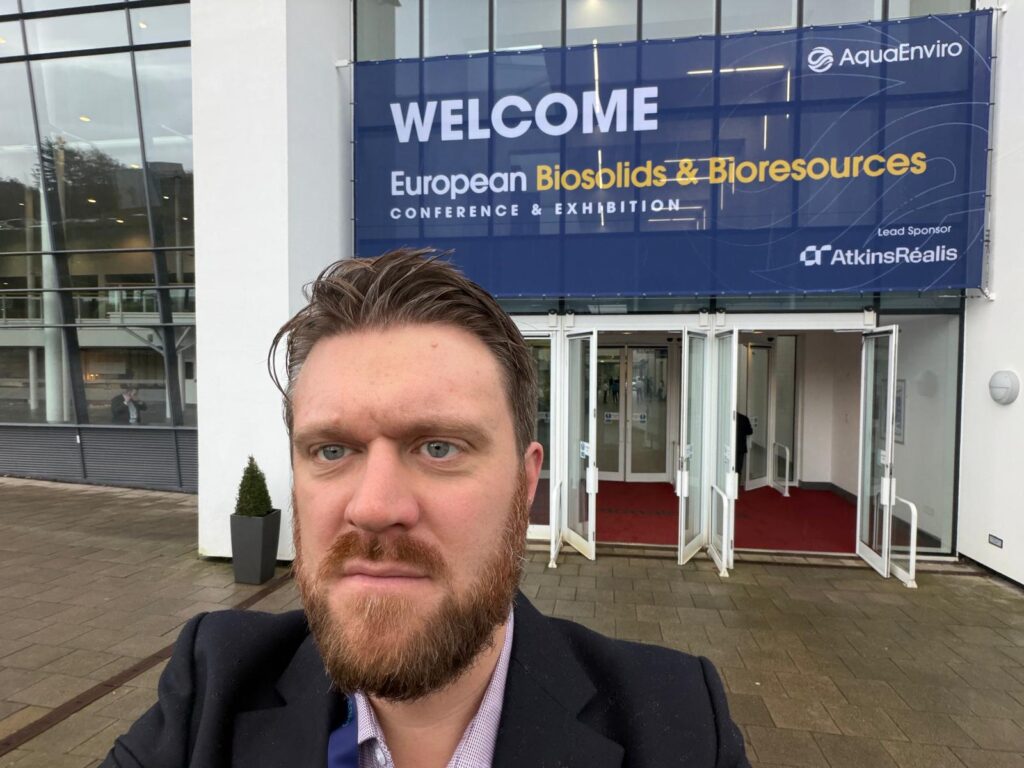
Representing Carbogenics, our Sales Director, Marco Lizzul, attended the conference to explore the latest developments, exchange ideas with industry professionals and discuss the potential role of engineered biochar in the sector.
From innovative resource recovery technologies and anaerobic digestion optimisation to emerging contaminants and the growing interest in pyrolysis, here are some of the key discussions and insights from the event.
1. Recovering More Value from Wastewater Resources
One particularly interesting discussion centred on the potential to recover valuable materials from wastewater treatment by-products.
Francesca McKendrick of United Utilities presented work involving Kaumera, a biopolymer recovered from extracellular polymeric substances (EPS) associated with wastewater sludge.
The technology highlights how materials traditionally managed as waste could potentially become feedstocks for valuable products.
It also reflects a broader shift in thinking across the wastewater sector: moving beyond waste treatment and disposal towards identifying opportunities for resource recovery and reuse.
Another presentation explored landfill leachate and nutrient stewardship, highlighting the importance of considering how nutrients and other materials are managed across different waste streams.
Together, these discussions demonstrated the growing interest in recovering value from wastewater resources while addressing environmental management challenges.
2. Pyrolysis and Biosolids-to-Biochar Technologies
Pyrolysis was another prominent topic, with discussions exploring its potential role in managing biosolids and producing carbon-rich materials.
Technology providers including Alfa Laval and Aqua Green discussed equipment and processing systems designed to convert biosolids into biochar.
Their work highlighted the progress being made towards implementing thermal conversion technologies at commercial scale, including developments involving UK water utilities.
There were also discussions around the potential applications of biosolids-derived biochar, including filtration and advanced wastewater treatment.
Research and industry activity in Ireland similarly highlighted growing interest in converting biosolids into biochar and investigating possible applications, including filtration and quaternary treatment.
However, an important consideration remains: producing biochar is only one part of the process. Establishing suitable, compliant and commercially viable applications for the resulting material is equally important.
Discussions highlighted the need for continued research into material characteristics, contaminant behaviour and regulatory requirements to support the wider adoption of these technologies.
3. Anaerobic Digestion: Challenging Established Approaches
Improving the efficiency and performance of anaerobic digestion (AD) was another recurring theme.
Yadira Bajón Fernández of Cranfield University discussed approaches to intensifying anaerobic digestion and challenging conventional assumptions about how AD systems operate.
Other presentations explored process intensification, pre-treatment technologies and alternative treatment configurations designed to improve performance.
Equipment providers also showcased technologies aimed at improving feedstock preparation, thickening and separation processes.
These developments are particularly relevant as wastewater operators look for ways to improve resource efficiency and optimise existing infrastructure.
For Carbogenics, the discussions also raised interesting questions about how engineered biochar could potentially support AD performance and process stability.
Further testing and collaboration will be important in understanding where such materials could provide practical benefits.
4. PFAS and Emerging Contaminants
The presence and behaviour of emerging contaminants was a significant topic throughout the conference.
Discussions included research into per- and polyfluoroalkyl substances (PFAS), their movement through wastewater treatment processes and their potential environmental impacts.
Ian Pepper of the University of Arizona presented research relating to PFAS uptake in crops, highlighting the importance of understanding how contaminants can move through environmental systems.
Meanwhile, work discussed by AtkinsRéalis explored biosolids sampling for PFAS and how different sludge treatment processes may influence contaminant levels.
Antimicrobial resistance was another area of interest, with contributions from representatives of Severn Trent and United Utilities.
These discussions reinforced the importance of continued research into contaminant behaviour, monitoring and treatment effectiveness.
They also highlighted the potential relevance of advanced filtration technologies and alternative treatment materials as the sector investigates ways to manage emerging contaminants.
5. Innovation in Filtration and Treatment Technologies
Alongside developments in biosolids processing, the conference showcased a range of technologies designed to improve wastewater treatment operations.
These included cellulose separation systems, solid-liquid separation equipment and containerised thickening technologies.
Such technologies demonstrate how innovation is taking place across multiple stages of the wastewater treatment process, from feedstock preparation and resource recovery through to advanced treatment.
There was also interest in the potential use of biochar-derived materials for filtration applications.
For engineered biochar technologies, this presents an interesting area for investigation, particularly where materials can be developed and tested for specific treatment requirements.
However, demonstrating consistent performance and compatibility with existing treatment infrastructure will be essential.
6. The Challenge of Moving from Innovation to Implementation
Beyond the individual technologies, one of the most important themes emerging from the conference was the challenge of translating innovation into widespread industry adoption.
There is considerable activity across research institutions, water companies and technology providers, with new processes being investigated and trialled.
However, regulatory requirements, environmental considerations and the need to demonstrate performance at scale remain important factors influencing how quickly technologies can be adopted.
This is particularly relevant for emerging biosolids-to-biochar applications, where potential uses must be assessed against existing regulatory frameworks.
Engineering consultancies such as AtkinsRéalis were prominent in discussions around emerging technologies, contaminant management and the development of new treatment approaches.
The conference highlighted the value of collaboration between water utilities, researchers, equipment suppliers and technology developers in progressing promising ideas towards practical implementation.
Looking Ahead: Opportunities for Collaboration
The European Biosolids & Bioresources Conference demonstrated the breadth of innovation taking place across the wastewater sector.
From recovering biopolymers and improving anaerobic digestion to investigating pyrolysis, advanced filtration and emerging contaminants, the discussions reflected an industry actively exploring more sustainable and resource-efficient approaches.
For Carbogenics, the event provided valuable opportunities to engage with organisations working across these areas and explore where engineered biochar technologies may contribute to future developments.
Perhaps the most important takeaway was that the sector is not short of innovative ideas. The challenge is identifying which technologies can deliver measurable benefits, meet regulatory requirements and be successfully integrated into real-world treatment operations.
As research progresses and industry collaboration continues, these discussions will play an important role in shaping the next generation of wastewater treatment and resource recovery solutions.


