
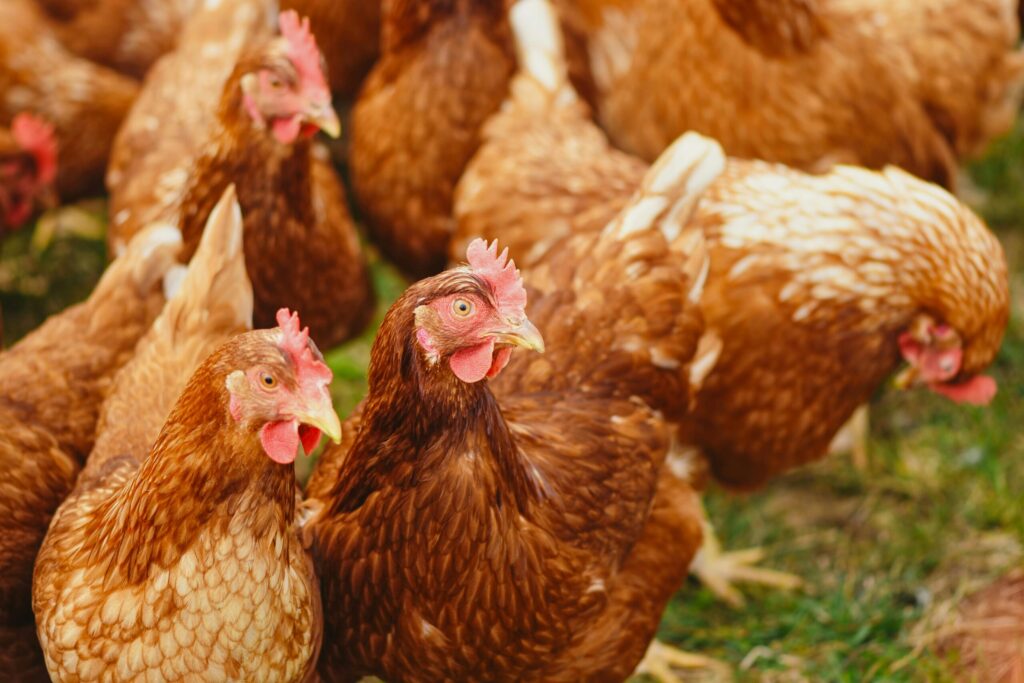
UK farmers grapple with a major legal shift that reclassifies chicken manure as waste, with the ruling making traditional manure spreading more difficult and costly, poultry producers and AD operators are facing a pivotal question:
Can chicken manure become one of the most valuable resources in the biogas sector?
With CreChar®, the answer is yes!
Read on to find out why:
Why This Matters Now: Chicken Manure is Legally Waste
A High Court ruling now classifies chicken manure as waste, not a by-product. This change brings serious consequences for farmers – particularly in poultry-dense regions – who must now comply with stricter handling and disposal rules.
It opens a new door for anaerobic digestion operators: poultry litter is now an abundant, affordable, and compliant waste-based feedstock.
For many farms, AD now becomes more than just a sustainability option – it becomes a compliance solution. Under schemes like the Green Gas Support Scheme (GGSS), at least 50% of biomethane must come from sustainable waste. Chicken manure, classified as such- making it not only available, but also strategically important.
The Push for Net Zero
As the UK pushes for Net Zero and more sustainable farming practices, anaerobic digestion (AD) has taken centre stage. But not all feedstocks are created equal – and while chicken manure might not be the first choice for all operators, its classification as waste makes it cheap and readily available. Chicken manure as a feedstock provides valuable opportunities but also some operational challenges.
So, let’s dig into the details and explore how we can make the most of this challenging feedstock – and how innovations like CreChar are helping turn chicken sh** into energy gold.
The Pros: Why Chicken Manure is Worth Considering
Despite its challenges, chicken manure has real potential in anaerobic digestion:
- High Biogas Yield
- Chicken manure is energy-dense, with high nitrogen and organic content. When properly managed, it can yield significant volumes of biogas. Biogas yield 20- 80m3 / t fresh chicken muck
- Abundant, Underutilised – and Affordable
- With poultry farming booming across the UK, chicken litter is readily available and often overlooked as a feedstock. Crucially, it’s also low-cost – or even free – especially when compared to energy crops or other agri feedstocks. For many operators, that makes it an economically attractive option, particularly in tight markets.
- Reduces Farm Waste
- Now legally considered waste, manure needs safe disposal. AD offers a closed-loop solution: waste in, energy out.
The Cons: Why It’s Tricky
Despite its benefits, chicken manure isn’t an easy ride.
- High Nitrogen
- Excess nitrogen leads to high ammonia concentrations, which is harmful to workers, can cause unpleasant odours, contributes to air pollution and inhibits microbial activity which reduces gas yield.
- Poor Digestibility
- Chicken manure often contains bedding materials like straw or wood shavings, which are harder to break down, leading to lower efficiency.
- Corrosive to Equipment
- The chemical profile of chicken manure – including ammonia and sulphur compounds – can be highly corrosive, adding maintenance costs and downtime for equipment repairs.
Considering the drawbacks, why do operators still use Chicken Manure?
So, with all the known challenges, why would an AD plant opt to use chicken manure?
- Poor Harvests, Poor Feedstock
- Extreme weather, disease, or soil degradation can result in reduced yields of energy crops like maize and grass. This leaves operators scrambling to source affordable, locally available alternatives – and chicken manure often fits the bill.
- Contract Expiry or Supply Chain Shifts
- When long-standing supply contracts for food waste or energy crops end, or markets become volatile, operators may pivot toward manure to maintain throughput.
- Rising Feedstock Costs
- With gate fees increasing and crop-based feedstocks becoming less economically viable, manure is often free or available at a lower cost, making it an attractive fallback.
- Circular Agriculture Goals
- Many farms are under pressure to adopt closed-loop systems. Using chicken manure in AD helps reduce waste, generate energy on-site, and produce digestate that can be reused as fertilizer, aligning with Net Zero and ESG goals.
Mitigating the Drawbacks of Chicken Manure in AD
Enter CreChar – our biochar specially designed for use in Anaerobic Digestion. It’s engineered to boost the performance of anaerobic digestion, helping operators manage the challenges of using tough feedstocks like chicken manure.
How CreChar Helps
Extensive research and real-world trials demonstrate that using CreChar in digesters:
- Reduces harmful gases
- CreChar helps adsorb excess ammonia and H2s, protecting the microbial community and stabilising the digestion process.
- Boosts Microbial Activity
- Its high surface area and porous structure make it an ideal habitat for methanogens, increasing microbial resilience and digestion speed. This in turn increases the biogas yield by up to 10% and increases methane concentration by up to 3%.
- Reduces Odour and Corrosion
- By moderating ammonia and H2s, CreChar reduces offensive odours and helps protect infrastructure from corrosion.
Chicken manure might not be the easiest feedstock to work with, but with the right strategy and smart additives like CreChar, it can become a valuable part of a balanced AD portfolio.
Ready to see the data for yourself? Explore our detailed case studies to learn how CreChar can support your site.
Discover Our Case Studies:
For further information on Crechar® and other services from Carbogenics please contact:
Alana McSkimming
alana.mcskimming@carbogenics.com

