
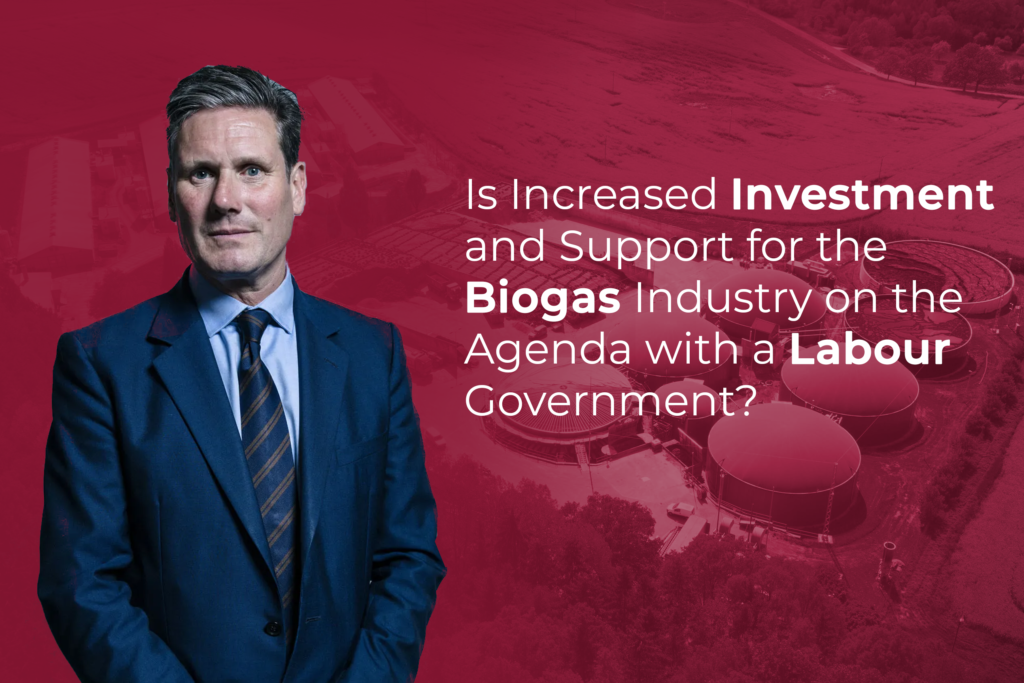
Labour’s got big plans to make Britain a clean energy powerhouse by 2030, but is Sir Keir Starmer prioritizing the best options? Let’s dive in and see how Carbogenics might fit into this green dream.
The Potential of Biogas and Carbogenics bio-additive: CreChar®
Biogas, is an unsung hero of renewable energy, is made from the anaerobic digestion of organic materials. It’s turning yesterday’s leftovers into today’s energy. Here’s why biogas deserves more love:
- Carbon Reduction: It captures methane, a greenhouse gas that would otherwise float up and warm our planet at every stage of the process.
- Energy Security: Biogas is created locally by design and thus provides a secure option for energy as demonstrated by the EU who are doubling biogas output by 2030 in response to the Russian invasion of Ukriane.
- Waste Management: Turns organic waste into gold—well, more like green energy.
- Circular Economy: It’s the ultimate recycling project, converting waste into something valuable, re-placing fossil fuels and permanently storing carbon in the soil
Carbogenics, through the addition of our CreChar® product which is itself sourced from waste and secondary biomass, has been designed to boost the performance of the biogas industry. CreChar is proven to make anaerobic digesters (the core kit involved in biogas production) work better, cleaner and more reliably.
Labour’s Green Energy Vision
Labour’s has a buffet of renewable priorities on the table: wind, solar, nuclear. They’re pouring cash into carbon capture, hydrogen, and marine energy, all to hit a zero-carbon electricity system by 2030. But where’s the biogas love, Sir Keir Starmer? Biogas is based on an established industry being scaled globally (c20% CAGR) and is ready to scale NOW, not in 5,10, 20 years like other ‘potential solutions’ being prioritised.
Surprisingly, neither main party has laid out clear plans to support recycling, particularly food waste recycling. Given the massive potential of food waste recycling to reduce carbon emissions and generate clean, renewable base load energy, this is a glaring omission. The Conservative manifesto mentions ‘recycling’ only once, and Labour doesn’t mention it at all, though they claim to be committed to reducing waste by moving to a circular economy.
Anaerobic digestion, despite its clear benefits, is not even featured in the renewable energy mix being considered by our politicians in their manifestos. This is disappointing, especially since our competitors in Europe and North America are accelerating their biogas production, introducing policy (such as the IRA act in the US or REPowerEU in Europe) that will seriously scale the industry. Denmark aims to be 100% powered by biogas by 2032! Even the current government has started to wake up discussing enhanced biogas production within the latest UK Biomass Strategy (2023) and introducing the Simpler Recycling scheme, mandating that all businesses collect food waste by March 2025, with local authorities following a year later- a key feedstock potential for anaerobic digestion.
Biogas should be the secret ingredient in Labour’s green energy stew:
- Its Secure. Its Sustainable. Its Scaling- thus reducing its cost in the face of rising energy prices…
- Complementary Technology: Biogas provides a steady energy supply, especially when the sun’s hiding and the wind’s taking a break.
- Job Creation: Building biogas plants means jobs, especially in difficult rural areas. Labour’s goal of 650,000 jobs by 2030? Biogas can help.
- Rural Development: Biogas can give rural economies a much-needed boost, turning farm waste into cash and diversifying the agricultural industry
- Reducing Agricultural Emissions: Agriculture is a big carbon culprit. Biogas can help clean up its act.
But why is the UK still importing gas from Russia and through its brokers in Turkey when we can increase the 1% biogas produced to a much higher level and leave fossil fuels in the ground?
The UK’s AD industry has the potential to generate at least 7.1 billion m3 of biomethane a year, enough to heat 5.5 million homes by 2030. However, we’re currently only delivering 19% of this potential. By 2050, production can increase at least fivefold from today’s production levels, and assuming a reduced gas demand, biomethane will be able to cover up to 61% of gas demand by 2050. According to the EBA this growth has the potential to create 465,000 jobs by 2030 and over 1.7 million jobs by 2050.
Integration into the Green Prosperity Plan
Labour’s Green Prosperity Plan aims to team up the public and private sectors for a cleaner future. Here’s how biogas can get in on the action:
- Public Investment: Continue and lengthen grants and subsidies for biogas infrastructure can kickstart private investment.
- Learn from the EU and US deploying policy and guidance to provide a roadmap for growth through sustainable feedstocks and differentiating between ket technologies
- Research and Development: Supporting innovation in biogas tech can make it more efficient and cost-effective. That’s where Carbogenics shines.
- Regulatory Support: Friendly policies can encourage the adoption of biogas solutions in agriculture and waste management.
- Market Development: Promote biogas as a key player in the renewable energy market.
Considerations
Biogas has heaps of potential, but let’s not ignore the hurdles:
- Economic Viability: Setting up biogas plants isn’t cheap. Economic feasibility depends on government support and market conditions.
- Technological Challenges: We need advancements to improve biogas efficiency and scalability. Carbogenics is all about solving these challenges.
- Policy Consistency: Investors need stable policies. Flip-flopping in the past has scared them off.
- Environmental Concerns: While biogas cuts methane emissions, the production process needs careful regulation to avoid environmental hiccups.
Conclusion
As Labour maps out a green future by 2030, biogas stands out as an opportunity to boost energy security, cut emissions, and drive sustainable growth. Carbogenics values the green energy shift and is committed to supercharging the anaerobic digestion industry. Biogas might not be front and center in Labour’s plan, but it deserves a spot in the limelight. With strategic investment and support, the biogas industry, bolstered by Carbogenics’ innovations, could be a key player in Britain’s clean energy future. So, Sir Keir Starmer, are you up for the challenge? Let’s make biogas a big part of the green revolution!
__ __
What is CreChar®?
Our flagship product CreChar® is a functional and sustainable carbon material known as biochar, with numerous applications in industry and agriculture.
With its large surface area and its unique chemical composition, CreChar® can stabilise biological performance and regulate pH in anaerobic digestion and wastewater treatment plants. It also has the potential to create ideal growth conditions for functional and process-enhancing microorganisms that digest organic waste.
Thanks to these properties, CreChar® increases the stability and efficiency of anaerobic digestion and wastewater treatment processes. The increased efficiency means that an anaerobic digestion plant can produce around 10% more biogas from the same amount of feedstock or maintain its output using less feedstock.
To discuss how CreChar® can support your Anaerobic Digestion plant, reach out to us at lidia.krzynowek@carbogenics.com or david.vaughan@carbogenics.com

